How to start a house church: four things to settle first
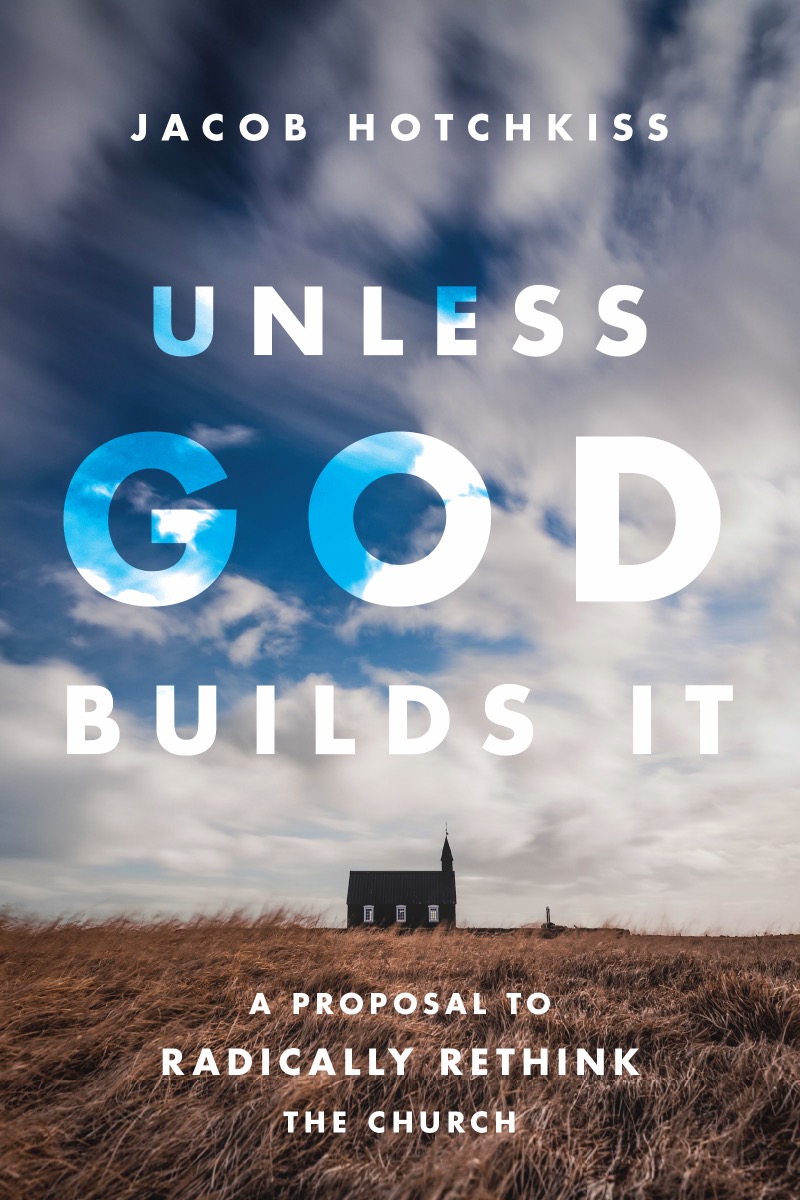
From the final chapter of Unless God Builds It, “Moving Forward,” the section titled “Starting a House Church.”
First and foremost, I ask you, is your mind right? Please do not start a house church out of bitterness or resentment toward those who do it differently or toward those who’ve hurt you. It’s unfortunately quite common for house churches to start this way, and the fruit of these communities is death, as they sit around bashing their brothers and sisters in Christ, identifying with one another around their former church-hurt. If you’re not in a state of total forgiveness, compassion, and humility toward the Church, then you’re not in a place to start any kind of church. Seek godly counsel, believe the gospel, and renew your mind, getting firmly established in Christ.
I can say with a true heart—which I hope you have perceived—that my church’s beginnings were none other than faith working through love, and the fruit of that is evident. New members in our community have sometimes commented that they’re surprised by how little we actually talk about “house church” or “the traditional church” or even why we operate the way that we do. That’s because we focus on building each other up through the word of God and prayer. A lot of the “why” behind what we do becomes manifest organically as they simply experience the benefits of how we relate to one another.
Secondly, if you’re leaving your current church, please do not be divisive. If there are people you trust within the church, submit your convictions to them with full sincerity, and ask them to weigh in and pray with you before making a final decision. Don’t do this as a mere formality, to “check the box,” but do it sincerely, humbly considering their response before the Lord. Even if you don’t come to agree, this is a way to honor them, and it will go a long way toward keeping peace within the Body of Christ during/after your departure. Ultimately, you must walk according to your own faith, not theirs.
When I left my former church, I also made a conscious effort not to invite anyone from that church to come with me. If they were interested in joining me, I decided that they would have to be the ones to reach out first. This kept my departure from becoming anything more than my departure. It was not a church split, nor a subversion of authority, but one member going a different direction in faith. As a result, I received kindness and blessings as I left. I strongly advise you to go about it the same way unless you receive a direct blessing from the leader(s) of your church to invite other members to join you.
Thirdly, I ask you to carefully consider the strength of your convictions regarding the things I’ve written about in this book. There is no guarantee that starting a church in your home will yield the kind of community I’ve described. Indeed, many house churches today have done little more than import the traditional church model into a smaller setting. Others have eventually drifted back toward the traditions of men despite initially having intentions to operate differently. In either case, they have not accomplished much to turn the tide.
On the other hand, many house churches that avoid the trappings of the traditional model have their own unique kinds of dysfunction due to a lack of love, submission, church discipline, an accurate gospel, etc. Therefore, much of what I’ve written in this book is a correction not only to my traditional-church brethren but also to my house-church brethren who, in some cases, need the exhortation just as badly.
The point here is that if your convictions are weak, it won’t work. Everyone and their brother is going to misunderstand you. People will challenge your ideas, tell you why you’re doing it wrong, and even suggest that you’re being prideful. Some will get very frustrated that you won’t just “do more,” while you insist that God will build it if we wait on him and do it his way. They’ll push hard for you to start bringing a teaching every week, and then, to add more structure to the gathering “because it feels like not much is happening.” Some will be with you for years before they finally understand what you’ve been saying about sharing our gifts with one another, loving one another, and speaking truth with one another. Many people will leave without having seemed to learn anything. Some will say it’s starting to feel cultish; they’ll perceive biblical submission as manipulation. Some will say that you hurt them, especially those who refuse church discipline.
With that in mind, are you confident enough that these are God’s terms for biblical community that you’re ready to die alone on this hill? I am. If I weren’t, I would’ve given up a long time ago, as many people do. So, whatever level of confidence you think you need in order to take this leap of faith is between you and God. However, I suggest, at the very least, that you get firm in your beliefs as quickly as possible, pray for extreme clarity, and then gird up your loins. The Enemy does not like what you’re thinking about doing.
And lastly, I would suggest that you go all in. It’s common for people to start house churches as a supplement to their traditional church community (e.g., meeting on a Saturday so everyone can still go to their normal churches on Sunday). However, in my opinion, this does a disservice to both communities. Referring back to our “one another” appointment, if you’re going to continue being a part of your traditional church community, you owe it to them to love them with full force, with wholehearted devotion. And the same goes for your house-church community. But if you’re a part of both, you won’t be able to love either in the way that is necessary. It’s not just about the one weekly gathering, but life outside the weekly gathering, as well.
In addition to how it divides your attention, you should also think about how it prevents others from learning the way of love, further exacerbating the issue of consumerism in the Church. I know a man who led a house church on Saturday nights for three years. All of his members attended a traditional church, as well, on Sunday mornings. Most people would think this is no big deal, and yet, he always struggled to get his members to be more than “attendees.” Not surprisingly, when he moved the time of his gathering to Sunday mornings, and they were forced to choose between the two, they all stopped coming to the house church and chose the traditional church, revealing the truth all along that the house church was never a community they were devoted to, felt responsible for, or were helping him to build. Instead, they had “consumed” the church experience he provided to them for years because they were never required to commit to any one community.
In this way, creating an expectation of commitment/devotion is intrinsically linked to discipleship. Something as simple as holding your house assembly on Sunday mornings can help to teach people the way of love (via the structure, not in spite of it) in ways that your words may never get through to them. As it requires people to reckon with this truth on the front end, it may also spare you a lot of time pouring into people who don’t actually feel appointed to your community. And if they don’t ultimately decide to be a part of your church, if they take your words to heart, you’ll be sending them back to their church with a greater devotion toward that body. It’s a win-win for the whole Body of Christ.
That being said, this is not a black-and-white thing, only something for you to consider. God may have wisdom for your particular situation that defies all the logic I just provided. So, as always, please bring to the Lord whatever I have said, letting him show you what applies to you, and then walk by faith.
From Unless God Builds It: A Proposal to Radically Rethink the Church by Jacob Hotchkiss, © No Longer I Media LLC. Reproduced by the author.
Keep reading
This chapter is not on Edify yet. Get the book.
Being released chapter by chapter on Edify, free. Unless God Builds It is available in paperback, hardcover, Kindle, and audio.
Read Unless God Builds It free, chapter by chapter.
Every chapter of No Longer I is on Edify, free. Unless God Builds It is being released there chapter by chapter. Subscribe and the first thing you'll get is Rewired by Prayer, a five-day devotional on renewing your mind through the Lord's Prayer.
No paywall on the writing. A paid tier exists for those who want the monthly community call.