What does the Bible say about women speaking in church? How one house church handles it
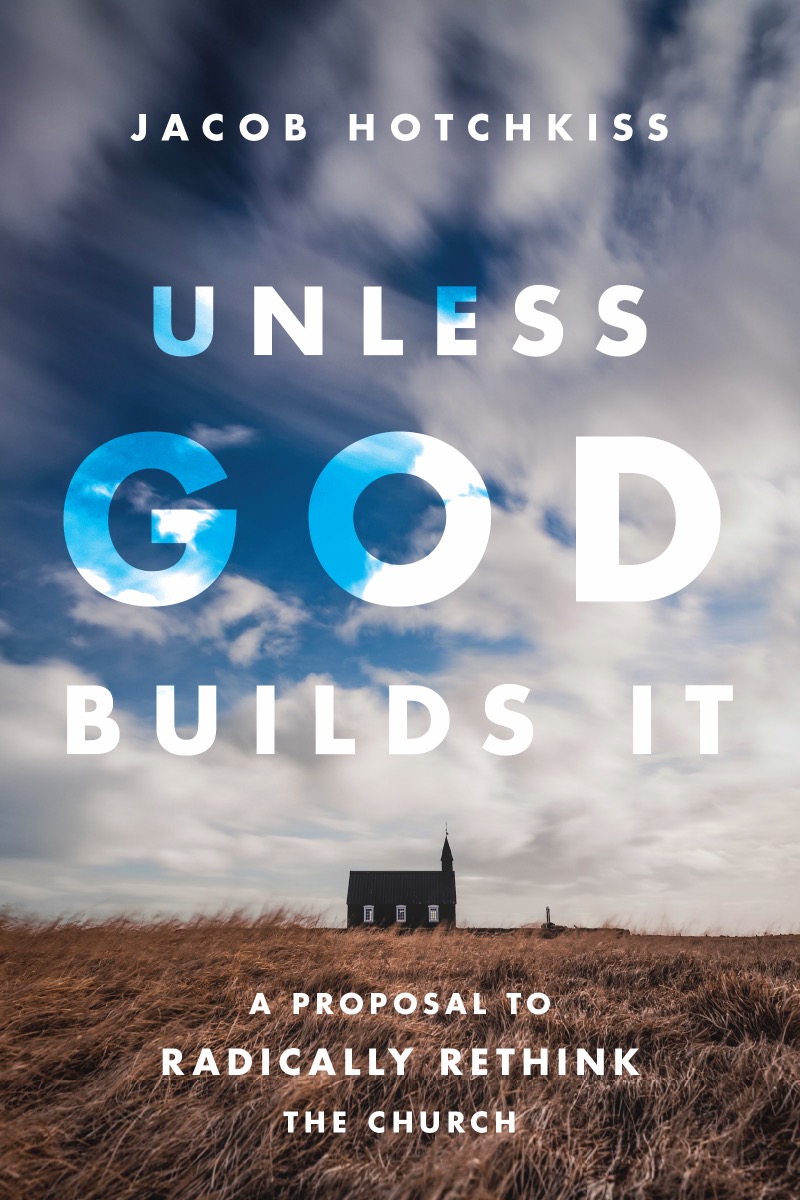
From chapter 4 of Unless God Builds It, “Submission,” the closing section, “Women Speaking in Church.”
As a final example, I’ll fulfill my promise from the last chapter to tell you where my church stands with women speaking in the assembly. In doing so, you’ll also get to see how we’ve navigated a sensitive theological issue using the biblical standard of submission.
In case you aren’t aware, there is considerable debate across the spectrum of Christian beliefs over what women are permitted (or not permitted) to do in the Church compared to men. Every denomination has its position on the issue, but they vary widely. The two scriptures which probably cause most of the debate are these:
As in all the churches of the saints, the women should keep silent in the churches. For they are not permitted to speak, but should be in submission, as the Law also says. If there is anything they desire to learn, let them ask their husbands at home. For it is shameful for a woman to speak in church. (1 Corinthians 14:33-35)
Let a woman learn quietly with all submissiveness. I do not permit a woman to teach or to exercise authority over a man; rather, she is to remain quiet. For Adam was formed first, then Eve; and Adam was not deceived, but the woman was deceived and became a transgressor. (1 Timothy 2:11-14)
On the surface, these passages seem pretty straightforward and, honestly, a bit difficult to swallow for anyone with more modern sensibilities (not that those are all assumed to be correct). And if these were the only scriptures that spoke on the issue, then we would have no real choice but to follow them exactly as they sound—“Women, don’t speak.” However, anyone who is open to the rest of their Bible intuits that it may not be that simple.
For example, in an earlier chapter of the same letter, Paul clearly implies that women are expected to be praying and prophesying in the gathering, only with the caveat that her head is covered (1 Corinthians 11:5). In this light, his later instruction to keep silent would suggest that it was only a certain type of speaking that was prohibited, not all speaking. In the context of chapter 14, it’s possible that he’s referring specifically to the weighing of prophecy (1 Corinthians 14:29), and in the context of his other writings, it’s possible that he’s referring to exercising authority (over men) in general, which includes teaching (1 Timothy 2:11-12) but not most other forms of speaking/prophesying.
Some additional factors to weigh are the fact that women clearly held important roles in the early church under Paul’s ministry (see, for example, Romans 16:1-2 and Philippians 4:3). One of them—Junia—he appears to call an apostle (Romans 16:7), which scholars still debate today. There’s the very interesting verse that “there is no male or female . . . in Christ Jesus” (Galatians 3:28). There’s the fact that Deborah was a prophetess and judge over all of Israel (Judges 4-5). And there’s the promise from God to pour out his Spirit on all flesh—that “your sons and your daughters shall prophesy . . . [and] Even on the male and female servants in those days I will pour out my Spirit” (Joel 2:28-29, my italics)—which we, of course, saw the beginnings of at Pentecost (Acts 2:1-21).
I want to be careful here not to open up a massive can of worms or to go down an unnecessary rabbit hole. There are plenty of other arguments I’m not mentioning on either side of the issue, but addressing the full complexities of this subject and examining each viewpoint fairly is far beyond the scope of this book.
In general, what I’d like to convey is that, due to many of the things I referenced above, and having humbly weighed the issue together as a church, through much conversation and prayer, we’ve collectively come to agree on a few things.
First, we agree that God is not currently granting us perfect clarity on the issue. It would, therefore, be terribly unwise for us to come to a final conclusion about it. It’s okay—no, necessary—to admit when you don’t know something. And to date, there’s no simple theological position we’re aware of that the whole church (myself included) is confident enough to endorse. So, whether or not you agree with how we address this issue, I hope you can respect the fact that we admittedly don’t know everything and are doing our best to obey the Scriptures and honor one another.
Second, we all emphatically agree that there is a place for women to minister “speaking” gifts in the gathering. This must be true in some capacity, for the Scriptures say they can pray and prophesy (see 1 Corinthians 11:5). Not to mention, we all genuinely desire the women to do so, believing they have many gifts to offer.
Third, we also agree that men’s and women’s roles are different, and that (according to the Scriptures) women are not to exercise authority over men. This isn’t something that only the men agree with, by the way, but something the women in our church also have a conviction for. They, too, desire to obey the Scriptures and to please God in the role he has given them.
Although we don’t exactly know how to describe when authority is being exercised, we’ve learned that it’s one of those things where “you know it when you see it.” Practically, this means that we continue to operate in the way that I’ve described—each person (man or woman) submitting to one another, freely sharing their gifts in love, humbly weighing what is said and done—and if someone discerns that a woman exercised authority over a man, then they can offer a correction and ask the church to weigh it. And indeed, the things men say are liable to scrutiny just as well. Always and to everyone, the question is: Was that the Holy Spirit?
This, I assure you, is not mere theory for us, but something we actively practice. Letting the Spirit lead in this way, through the collective discernment of the saints in each unique moment, is the most pragmatic approach to maintaining order in the life of the Church while addressing complex theological issues that the Church has largely been unable to solve using the methods of man.
From Unless God Builds It: A Proposal to Radically Rethink the Church by Jacob Hotchkiss, © No Longer I Media LLC. Reproduced by the author.
Keep reading
Read the whole chapter free, or get the book.
Being released chapter by chapter on Edify, free. Unless God Builds It is available in paperback, hardcover, Kindle, and audio.
Read Unless God Builds It free, chapter by chapter.
Every chapter of No Longer I is on Edify, free. Unless God Builds It is being released there chapter by chapter. Subscribe and the first thing you'll get is Rewired by Prayer, a five-day devotional on renewing your mind through the Lord's Prayer.
No paywall on the writing. A paid tier exists for those who want the monthly community call.