What “identity in Christ” actually means: the mirror in James 1
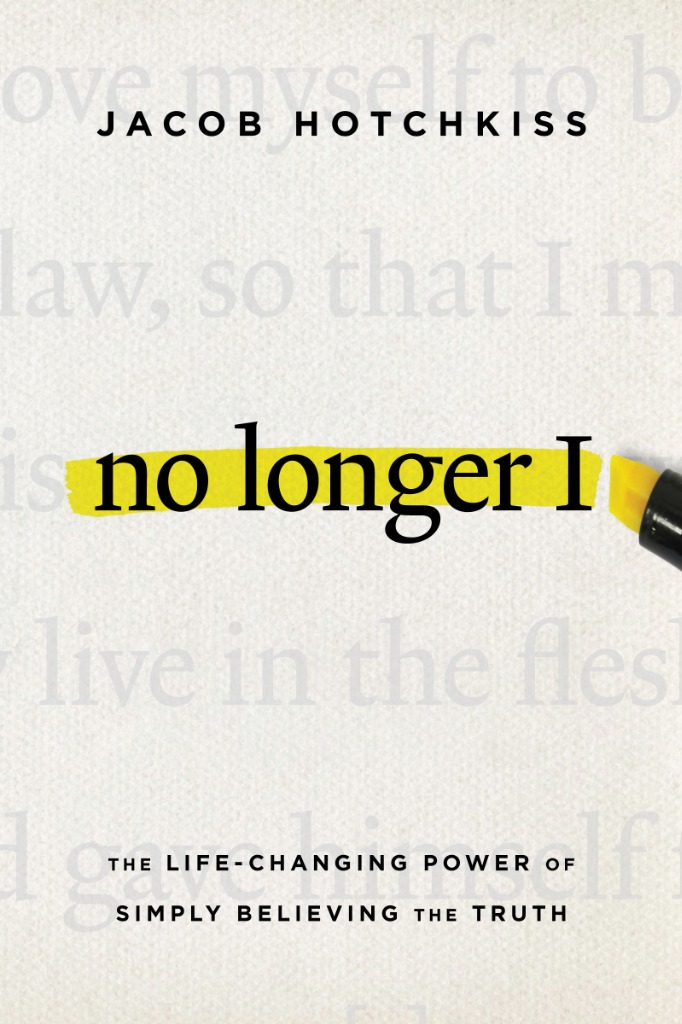
From chapter 4 of No Longer I, “The Linchpin of the Gospel,” the section titled “Looking in the Mirror.”
But be doers of the word, and not hearers only, deceiving yourselves. For if anyone is a hearer of the word and not a doer, he is like a man who looks intently at his natural face in a mirror. For he looks at himself and goes away and at once forgets what he was like. But the one who looks into the perfect law, the law of liberty, and perseveres . . . he will be blessed in his doing. (James 1:22–25)
As I teach about grace and faith being the solution to sin, there is a question that often arises: If we are only to believe, then how do we make sense of all the commands in Scripture that tell us specifically what to do? In the passage above, we find a wonderful answer.
According to James, if you are a Christian, to encounter the word of God—by hearing it taught, by reading it in our Bibles, etc.—is like looking at yourself in the mirror. For example, if God’s word instructs you to keep from lusting after women, then you are not lustful. If God’s word says to forgive and to love your enemies, then you are forgiving and a lover of your enemies. If God’s word says to seek first the kingdom of God and not to serve money, then you are not someone who cares about money, possessions, and other worldly things. If God’s word says not to fear, then you are a courageous and faithful believer. Hopefully, you get the point. The do’s and don’ts of Scripture are actually are’s and aren’ts pertaining to your true image, which is Christ. This is because Christ is the word of God, and the word is inside of you now.
Take a minute to apply this personally to your own life. What is one thing about yourself that you feel is most contrary to God’s character? Once you have identified it, give thanks to God that it is not actually who you are. Say, for instance, it is anger. You could say something like, “Thank you, God, that you have made me a patient, gentle, and loving person.” Or take a command within Scripture and then rejoice that it now describes you. The Bible says, “Trust in the LORD with all your heart, and do not lean on your own understanding” (Proverbs 3:5). So you might tell God, whether or not you feel it, “I trust you completely! Thank you for putting Jesus’ faith in me!” If you cannot see it, that’s okay. Just keep looking deeper, letting God show you who you really are. Do not look at the flesh, for you will not find it there. Instead, look at your union with Christ, established by the word of God, to which the Spirit within you will testify as the truth.
God’s commands are no longer just rules to follow or even something you need to strive to become. Rather, the whole law has been written on our hearts (see Jeremiah 31:33, cf. 2 Corinthians 3:3). Whatever God’s word commands is a reflection of who we truly are. How? Because the Word, himself, if you have “received [him] with meekness” (James 1:21), is your new life and identity. This is why, in the same letter (Romans) where Paul says so emphatically that we are no longer under the law, he also says, “Do we then overthrow the law by this faith? By no means! On the contrary, we uphold the law” (Romans 3:31). The law is not over us anymore; it is in us. Therefore, it still has a very important purpose—to tell us who we are.
Notice what else James calls this “word”—“the perfect law, the law of liberty” (James 1:25). Instinctively, there is nothing about the words “perfect” and “law” that sounds liberating. But that is because we have always looked at Jesus—the perfect one, the fulfillment of the law—as just a picture on a wall. He has been something entirely outside of us, the image of what we are not and what we should strive to become. Surely, under the law, this is exactly how it is! But under grace, Jesus comes into us, and that picture of Jesus becomes a mirror showing him as our true reflection.
It is now easier to see what is happening when we are disobedient to God’s commands. According to James, it is like walking away from the mirror and forgetting what we are like (James 1:24). Striking, isn’t it? He does not say that if we sin, it is because we are still sinners in need of more grace or more repentance. Nor is it because we do not love God enough. Instead, if we sin, it is because we forgot (or did not believe) that we are saints in love with God. Sin, therefore, is deception (which he says in v. 22), and righteousness is truth. If we sin, it does not necessarily mean we are unrighteous. It means that we did an unrighteous thing, out of character, because we believed a lie.
This changes the way that we repent, does it not? If the actual fault was due to unbelief, then repentance is belief. Sin is no longer an accurate reflection of who you are. It is the result of not seeing your true reflection, who is Jesus.
This is different for the believer and the unbeliever, to be clear. For unbelievers, repentance requires a surrendering of their life to Jesus, that they might die to sin and live to righteousness. Jesus is still outside of them—just like the picture on the wall, so to speak.
But for us believers, repentance is the remembrance of our death and new life in him. It does not entail trying to change ourselves or praying that God will finally change us. Nor does it entail mulling over our depravity and beating ourselves up for it. True repentance is to acknowledge that what we did was based on a lie. It is to turn back around, look into the mirror, see Jesus, and believe. The one who perseveres in this “will be blessed in his doing” (James 1:25).
I challenge you now: go find a mirror, look at yourself in the mirror, and by faith, see Christ in you and nothing else. Let this image be seared into your brain. Then, as you walk away and go about your day, remember what you saw and see how it transforms you.
From No Longer I: The Life-Changing Power of Simply Believing the Truth by Jacob Hotchkiss, © No Longer I Media LLC. Reproduced by the author.
Keep reading
Read the whole chapter free, or get the book.
Every chapter is on Edify, free. No Longer I is available in paperback, hardcover, Kindle, and audio.
Read No Longer I free, chapter by chapter.
Every chapter of No Longer I is on Edify, free. Unless God Builds It is being released there chapter by chapter. Subscribe and the first thing you'll get is Rewired by Prayer, a five-day devotional on renewing your mind through the Lord's Prayer.
No paywall on the writing. A paid tier exists for those who want the monthly community call.
Other questions the book answers
- Galatians 2:20 explained: what “no longer I who live” meansChapter 4
- Union with Christ: what it means to be one spirit with himChapter 4
- Romans 6: what “consider yourselves dead to sin” means in practiceChapter 5
- Why do I keep sinning as a Christian? The story of my besetting sinChapter 3
- Romans 7 explained: is Paul describing the normal Christian life?Chapter 2
- 1 John 1:9: do Christians have to keep confessing sin to stay forgiven?Chapter 9
- What is “the flesh” in the Bible?Chapter 10
- Overcoming depression as a Christian: where the depression actually livesChapter 13